Buck, boost and bidirectional stages
Review DC bias, ripple waveform, transient current and allowable loss across the actual operating range.
 Magnetic Component Engineering
Inductance and a single current rating are not enough. IKP reviews peak and RMS current, ripple, DCR, switching frequency, temperature rise, cooling and available space before proposing a standard or custom path.
Product suitability, ratings, test conditions and compliance requirements are confirmed by IKP engineering before quotation.
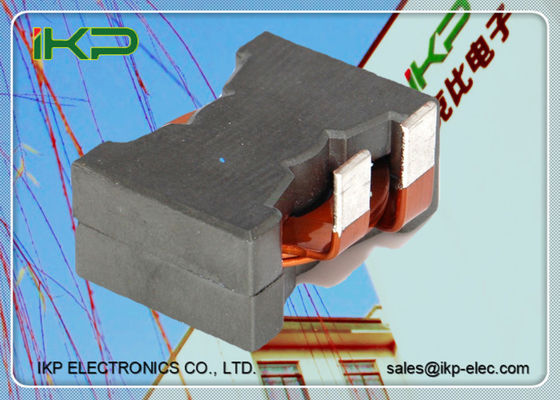
Flat-wire structures can support low-resistance, high-current designs. The final part and rating remain tied to agreed test conditions.
Review DC bias, ripple waveform, transient current and allowable loss across the actual operating range.
Connect inductance tolerance, ripple attenuation, saturation margin and thermal limits to the system requirement.
Evaluate current density together with winding loss, mounting, airflow and the available mechanical envelope.
A catalog candidate is useful only when its rating definition and test conditions can be compared with your requirement.
Filter available IKP records by inductance, current, DCR and size, then flag every incomplete or incomparable field.
Browse high-current products →Provide the current manufacturer and part number so electrical, mechanical and evidence differences can be recorded.
Start a replacement review →When the standard envelope or winding does not fit, provide the operating point, drawing constraints and project volume.
Discuss a custom inductor →Separate RMS, average, peak, transient and fault-current conditions and include the ripple waveform.
Share DCR, efficiency or loss targets plus the cooling method, ambient and temperature-rise limit.
Compare winding, core, dimensions, mounting and the stated conditions behind each published value.
Confirm the drawing and sample under project-specific electrical and thermal acceptance criteria.
Send what you already know. Missing items will be identified as open questions rather than silently assumed.
IKP will return a preliminary standard, replacement or custom path and list the evidence still needed before quotation.
Share the application, electrical requirements, mechanical limits, volume and timing. Please do not include personal information that is not needed for the project.